
Is the thought of navigating complex legal requirements, endless paperwork, and years of waiting holding you back from pursuing a new nationality? The dream of holding a new passport can often feel buried under a mountain of bureaucracy, leaving you worried about making a single mistake that could lead to rejection. You’re not alone in feeling this way. This challenging yet rewarding journey is officially known as citizenship by naturalization, and with the right guidance, it is more achievable than you might think.
In this comprehensive guide, we will demystify the entire path for you. We’ll break down the process into clear, manageable steps, from securing residency to preparing for your citizenship interview and taking the final oath of allegiance. You will gain a solid understanding of the most common requirements across different countries and learn the crucial difference between being a resident and a full-fledged citizen. Our goal is to replace your confusion and fear with clarity and confidence, providing you with the roadmap you need to successfully begin your journey.
What is Citizenship by Naturalization? The Core Concept Explained
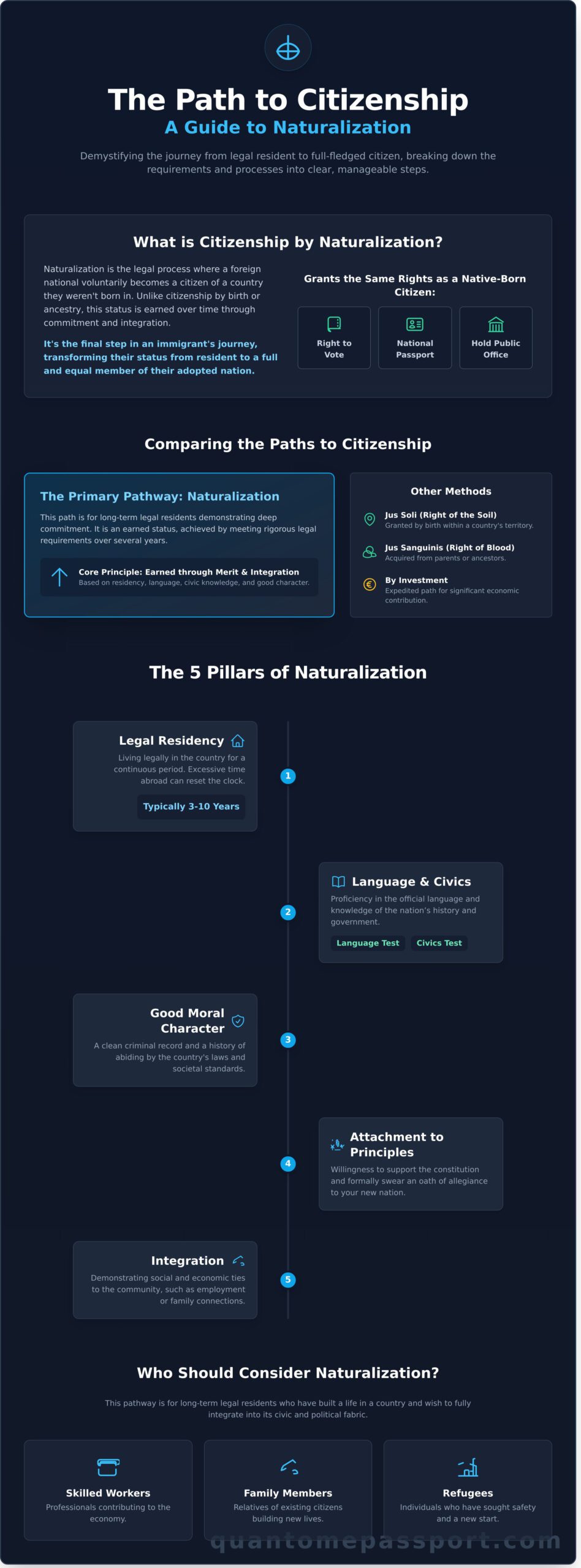
Citizenship by naturalization is the legal process through which a foreign national or immigrant voluntarily becomes a citizen of a country they were not born in. Unlike citizenship acquired by birthright or ancestry, this path is earned over time. It represents a profound commitment, requiring an individual to meet specific legal requirements, demonstrate integration into society, and formally pledge allegiance to their new nation. For a deeper dive into the historical and legal framework, Wikipedia offers a comprehensive answer to the question, What is naturalization?
To better understand the personal motivations driving individuals to pursue this path, watch this short video:
Successfully completing the naturalization process grants an individual the same rights, privileges, and responsibilities as a native-born citizen. This includes the right to vote, hold public office (with some exceptions), and travel with a national passport. For millions of immigrants worldwide, it is the most common and definitive step toward full membership in their adopted country, transforming their status from a resident to a citizen.
Naturalization vs. Other Paths to Citizenship
It’s important to distinguish naturalization from other ways a person can obtain citizenship. The primary methods include:
- Jus Soli (Right of the Soil): Citizenship is automatically granted to anyone born within a country’s territory, regardless of their parents’ nationality.
- Jus Sanguinis (Right of Blood): Citizenship is acquired through parents or ancestors. If one or both parents are citizens, their child may also be a citizen, even if born abroad.
- Citizenship by Investment: Some countries offer an expedited path to citizenship in exchange for a significant financial contribution to their economy, a process distinct from traditional naturalization.
Who is the Naturalization Pathway Designed For?
The citizenship by naturalization pathway is primarily designed for long-term, legal residents who have built a life in a country and wish to make it their permanent home. This includes a diverse group of individuals, such as skilled workers contributing to the economy, family members of existing citizens, and refugees who have sought safety and a new beginning. Ultimately, it is for those who seek to fully participate in the civic and political life of their community, including exercising the fundamental right to vote and have a voice in their government.
The 5 Common Pillars of Naturalization Requirements
While the exact laws differ from one nation to another, the journey to citizenship by naturalization is almost universally built upon five core pillars. Understanding this framework provides a clear roadmap of what to expect, regardless of your target country. Meeting these requirements is how you demonstrate your commitment, your ability to integrate, and your respect for the laws and values of your new home society.
| Pillar | Core Requirement |
|---|---|
| 1. Residency | Living legally in the country for a specified, continuous period. |
| 2. Language & Civics | Demonstrating proficiency in the official language and knowledge of the nation’s history and government. |
| 3. Good Moral Character | A history of abiding by the country’s laws and societal standards. |
| 4. Attachment to Principles | Willingness to support the constitution and swear an oath of allegiance. |
| 5. Integration | Showing social and economic ties to the community. |
Pillar 1: Legal Residency and Physical Presence
This is the foundation of any naturalization application. Countries require you to live there legally for a minimum period, typically ranging from three to ten years. This period usually begins once you obtain permanent residency. You must also prove continuous physical presence, meaning you haven’t spent excessive time abroad. Long trips can reset the clock or disqualify your application, so it’s crucial to track your travel dates carefully.
Pillar 2: Language Proficiency and Civic Knowledge
To fully integrate, you must be able to communicate. Most countries require applicants to pass a test demonstrating a basic command of the official language(s) in speaking, reading, and writing. Alongside this, a civics test assesses your understanding of the nation’s history, government structure, and core values. For example, the comprehensive U.S. citizenship requirements detail these specific tests. Exemptions are often available for older applicants or those with certain medical disabilities.
Pillar 3: Good Moral Character
This requirement ensures that new citizens are law-abiding members of society. Immigration authorities will conduct thorough background checks. A criminal record, especially for serious offenses, can be a major barrier. However, even minor infractions or a pattern of unlawful behavior can jeopardize your application. Proving good moral character also extends to financial honesty, such as a consistent record of filing and paying taxes.
Pillar 4: Attachment to the Constitution and Integration
The final steps of the citizenship by naturalization process often involve a formal declaration of loyalty. Applicants are typically required to swear an Oath of Allegiance, pledging to support the constitution and laws of the country. Beyond this oath, you must demonstrate genuine integration into society. This can be shown through stable employment, community involvement, owning property, or having family ties, all of which strengthen your case as a committed future citizen.
The Naturalization Process: A General Step-by-Step Roadmap
Embarking on the path to citizenship by naturalization can feel like navigating a complex maze. While the specific requirements, timelines, and fees vary significantly from one country to another, the fundamental stages of the journey share a common structure. For instance, the criteria for EU citizenship through naturalization can differ greatly between member states like Germany and Portugal. This roadmap is designed to demystify the process by breaking it down into four general stages, providing a clear and realistic overview of what to expect.
Residency
Application
Interview
Oath
Stage 1: Fulfilling the Residency Requirement
This is often the longest and most passive phase of the process. It involves legally residing in your new country for a continuous period, typically several years. During this time, it is crucial to maintain a clean criminal record and a stable financial history. Meticulously track your physical presence, as many countries have strict rules about the number of days you can spend abroad without resetting your residency clock.
Stage 2: Application, Biometrics, and Documentation
Once you meet the residency criteria, you can begin the active application phase. This involves gathering an extensive portfolio of documents, which may include your passport, birth certificate, residency permits, employment history, and tax records. After submitting the official naturalization application, you will typically be scheduled for a biometrics appointment where your fingerprints and photograph are taken for security and background checks.
Stage 3: The Interview and Examination
This is a pivotal step where immigration officials verify the information on your application and assess your eligibility. Most countries require applicants to pass an examination to demonstrate knowledge of the nation’s language, history, laws, and values (often called a civics test). To prepare:
- Review all information on your application for accuracy.
- Study the official government-provided materials for the civics and language tests.
- Practice your language skills in a conversational setting.
Stage 4: The Final Decision and Oath Ceremony
After your interview, you will receive an official decision on your application. If approved, the final step is attending an oath ceremony. This is a formal, often moving event where you pledge allegiance to your new country and its constitution. Upon taking the oath, you officially become a citizen and receive your Certificate of Naturalization, the document that allows you to apply for your new passport and enjoy the full rights of citizenship.
Benefits and Responsibilities of Your New Citizenship
Completing the long journey of citizenship by naturalization is a monumental achievement. It marks the beginning of a new chapter, not just with a new passport, but with a profound, two-way commitment between you and your adopted country. This is the ultimate reward for your perseverance, granting you a full and permanent stake in your new home. Let’s explore the incredible rights you gain and the important duties you accept.
The Rights and Privileges You Gain
As a new citizen, you unlock a suite of fundamental rights that solidify your place in society. These privileges are the cornerstones of full membership in your new nation and include:
- The Right to Participate in Democracy: You can vote in all elections-local, state, and federal-and are eligible to run for public office.
- Unrestricted Freedom: You gain the absolute right to live, work, and own property anywhere in the country without fear of deportation or visa expiry.
- Global Mobility: A national passport provides access to visa-free travel to numerous countries and offers the protection of your new government while abroad.
- Consular Protection: If you encounter trouble overseas, you can seek assistance from your new country’s embassies and consulates.
The Obligations and Duties You Accept
This new relationship also comes with responsibilities. Embracing these duties demonstrates your commitment to the nation’s values and contributes to its collective well-being. Core obligations typically include:
- Obeying the Law: You must respect and follow all laws, from local ordinances to the federal constitution.
- Paying Taxes: Like all citizens, you are responsible for paying taxes to fund public services such as infrastructure, education, and defense.
- Civic Participation: Depending on the country, you may be called upon to serve on a jury or, in some cases, be required to register for military service.
Impact on Family and Dual Nationality
Your new status can have a powerful, positive impact on your family, often simplifying the process for your spouse or minor children to gain residency or citizenship. A common question is whether you can retain your original nationality. This is known as dual citizenship, and policies vary dramatically worldwide. Some countries fully permit it, while others may require you to renounce your previous citizenship.
Navigating these complexities is a critical step in the citizenship by naturalization process. For expert guidance on how these rules apply to your specific situation, explore the resources at quantomepassport.com.
Planning Your Path to EU Citizenship Through Naturalization
For many global citizens, the ultimate goal of the naturalization process is not just a new passport, but the freedom and opportunity that comes with European Union citizenship. It’s a common misconception that the EU itself grants this status. In reality, the path is more strategic: you become an EU citizen by first becoming a citizen of an individual member state.
This means that by successfully completing the naturalization process in a country like Slovenia, Portugal, or Ireland, you automatically gain the rights to live, work, and travel freely across all 27 EU member countries. The entire journey, however, begins with a single, crucial first step: securing legal residency in your chosen country.
Naturalization Timelines Across the EU
The time required to qualify for citizenship varies significantly across the European Union, making long-term planning essential. While most countries require continuous legal residency, the specific duration differs. Here are a few examples:
- Portugal: 5 years of legal residency
- Ireland: 5 years of reckonable residence
- Spain: 10 years of legal residency (can be reduced)
- Germany: 8 years, often reducible to 6 or 7 with integration efforts
Some nations offer accelerated pathways for individuals with ancestral ties, spouses of citizens, or those making significant economic contributions.
How Residency Programs Pave the Way
This is where strategic planning becomes powerful. Residency programs, such as those available in Slovenia or Portugal, provide the legal foundation for your stay. Obtaining a residency permit is the official act that starts the clock on your naturalization timeline. It transforms an abstract goal into a structured, predictable process, providing a clear roadmap to meeting the physical presence requirements for citizenship by naturalization.
Expert Guidance for Your Citizenship Journey
Navigating the intricate legal systems of 27 different EU nations is a formidable task. Each country has unique laws, documentation requirements, and bureaucratic processes. Attempting this journey alone can lead to costly delays and irreversible mistakes. Professional guidance ensures you choose the most efficient and suitable path based on your personal circumstances, saving you time and securing your future.
Ready to turn your dream of EU citizenship into a concrete plan? Book a private strategy call with our experts to map out your personal journey today.
Embark on Your Journey to New Citizenship
The path to becoming a citizen of a new country is a significant undertaking, but it is an achievable goal with the right knowledge. As we’ve explored, understanding the core requirements-from residency to language proficiency-is the first crucial step. The process follows a clear roadmap, and successfully navigating it unlocks a world of new rights and responsibilities. Achieving citizenship by naturalization is more than a legal process; it is the beginning of a new chapter in your life story.
The journey can seem complex, but you don’t have to walk it alone. The experts at Quantome Passport provide clear, strategic planning to guide you toward your long-term goals. With offices in London and Dubai serving a global clientele, our team is ready to provide expert guidance on EU residency and citizenship paths. Don’t let uncertainty hold you back. Explore your pathway to EU citizenship with Quantome Passport today and take the first step. Your future as a global citizen awaits.
Frequently Asked Questions About Citizenship by Naturalization
What is the difference between permanent residency and citizenship?
A permanent resident (green card holder) can live and work in the U.S. indefinitely but cannot vote in federal elections, hold a U.S. passport, or serve on a jury. Citizenship grants these rights, along with absolute protection from deportation and the ability to run for most public offices. Citizens also often have an easier time sponsoring relatives for immigration and can access certain federal jobs and benefits unavailable to non-citizens.
How long does the entire citizenship by naturalization process typically take?
The timeline for the citizenship by naturalization process varies significantly by location and individual case complexity. On average, you can expect the process to take between 8 and 12 months from the time you file Form N-400 to attending the Oath of Allegiance ceremony. However, processing times can sometimes extend to 18 months or longer depending on USCIS backlogs and the specifics of your application, so it is best to check current estimates.
Can my naturalization application be denied? What are the common reasons?
Yes, your application can be denied. Common reasons include failing the English or civics test, not meeting the continuous residence and physical presence requirements, or having a disqualifying criminal record. Other major reasons for denial are providing false information on your application or failing to demonstrate good moral character. It is crucial to be honest and thorough to avoid having your application rejected, which can affect future immigration petitions.
Will I have to give up my original citizenship when I naturalize?
The United States permits dual citizenship, so you are not required by U.S. law to renounce your previous nationality. However, your country of origin may have different laws. Some countries automatically revoke your citizenship if you voluntarily become a citizen of another nation. Before applying, you must check the laws of your home country to understand if you will be forced to give up your original citizenship upon becoming a U.S. citizen.
Do children born after I become a citizen automatically get citizenship?
Yes, in most cases. A child born outside the U.S. to at least one U.S. citizen parent is typically a U.S. citizen at birth, provided certain residency requirements are met by the parent. Additionally, minor children (under 18) who are permanent residents may automatically acquire “derivative” citizenship when one of their parents naturalizes. The specific laws can be complex, so it is wise to confirm your child’s eligibility.
Do I need an immigration lawyer or consultant to apply for naturalization?
While not legally required, hiring an immigration lawyer is highly recommended for complex cases. If you have a criminal record, previous immigration violations, or long absences from the U.S., legal counsel can be critical. For a straightforward case, many applicants successfully file on their own. However, an experienced attorney can help you navigate the process, avoid common errors, and ensure your application is as strong as possible.